Information technology is just about getting warmed up, It now seems like witchery or wizardry we see on TV. Hell no! this ain't no sorcery, this is where ICT is about to dwell. If you have a passion for tech gadgets then this product is a good exploration point.
wymo whyte
This armband is a wearable gesture control and motion control device that allows you to operate and control your mobile phones, whiteboards, computer/PCs, play games, home electronics, drones, toys just name it. Truly a masterpiece.
Ideal gift item for nerdy kids and indeed for everyone. Its usefulness cuts across personal/home, enterprise, professional and military application.
Smartphones are speculated to help streamline your life, not so? After all, they are your one-stop-shop for everything from managing your schedule, communicating with work contacts, staying connected with friends and beloved ones, and even delivering recreation. But while these fantastic gadgets could add order to our lives, they'll leave behind a path of clutter in their wake.
Your phone itself could also be sleek and sophisticated, but the day-after-day of using one also involves a litany of accessories, from earphones, to cases, to selfie sticks, to those ubiquitous chargers. There is a chance you have cables for charging your phone strewn everywhere your nightstand, your car, your desk, and perhaps even have a travel charger in your bag (if not also a full-on backup battery pack).
Is there perhaps an improved way to power our phones, still taking advantage of efficient, reliable wired charging while doing one thing about the mess of cords that all too easily permeates our existence? Scosche thinks so, and puts forth its MagicMount Wall Charger as the answer.
ARCHITECTURE
The MagicMount relies around a straightforward enough idea:
so as to scale down wire clutter when charging our phones, why not keep the
phone as close as possible to the charger itself? And to make that as simple as
possible, the MagicMount taps into the power of magnets.
The charger is a straightforward power brick – a little
larger than your typical smartphone charger, however smaller than something
like a laptop power supply. It plugs into a grounded outlet and has a single
USB port on the bottom, capable of 2.4A output.
So far, there is nothing significantly special here, however
the MagicMount Wall Charger's “magic” is hiding slightly below the surface: the
adapter is equipped with some powerful magnets. when paired with an identical
MagicPlate – an adhesive panel that secures to the rear of your smartphone –
you can stick your phone right onto the Wall Charger, where it will remain
firmly in situ.
The MagicMount Wall Charger comes with 2 metal plates: atiny
low one for a lot of petite handsets, and a bigger one to make sure that even
heavier phablets stay firmly in situ. The 3M auto-grade adhesive on each pads
is meant to provide a tight grip while also being removable without inflicting
any lasting damage. however if even that has you feeling slightly wary, Scosche
also includes a clear protecting film sticker that you can put on your phone
first, and then attach the magnetic plate to the film.
There's a lot of flexibility in how you can apply those
plates: they will go directly on a phone themselves, attach to a case, and you
can even keep your phone looking neat by placing one on the inside of the case,
where it cannot be seen. There, though, you run the risk of reduced grip
strength, thus confirm that the charger's magnets have a good hold of your
phone before leaving it there.
Then it's simply a matter of plugging the MagicMount into a
convenient outlet, hooking up a USB cable, and putting your phone in place. Because
of the manner it holds phones facing forward, you've got a good view of any
standing LEDs to allow you to know once charging's done.
Indeed, the MagicMount Wall Charger will precisely what it
sets out to do: it holds your phone to the wall while providing power for
charging. And in the right environment, that may get your phone and charging
cable off your table, reducing muddle in the process.
Maybe the ideal placement, then, is something like an outlet
adjacent to a countertop surface – safely up above the ground, and in a
situation where there really can be some profit to releasing up counter space.
The MagicMount Wall Charger is supposed to be used with one
device at a time, and has a single USB port to match. And though its 2.4A
output puts it up there among the most powerful of traditional USB chargers, we
can't help but notice that it lacks support for specific fast-charging tech,
like Qualcomm's quick Charge. maybe the logic there's that if you're phone's
not cluttering up the counter while charging, you do not care how long it takes
to juice up. but it would still be nice to get to enjoy Scosche's interesting
accessory without sacrificing more advanced charging tech.
Hyundai will extend its power car lineup with the new Sports Utility Vehicle. The South Korean guaranteed the second era of the Hyundai Tucson IX Fuel cell vehicle would be considerably more productive than the primary model.
The present version of the Hyundai Tucson ix controlled by a power fuel cell is just accessible in California. It is not clear if the new Tucson will have similar limitations, however.
Hyundai by anticipation is expected to present its new SUV by mid-2017 and reservations will most likely begin to be accessible in the most recent three months of the year.
As indicated by Nikkei, the news site, not just will the organization discharge the new power device SUV, yet they will likewise dispatch another business transport in the coming two years. The last will likewise work with fuel cells
Hyundai new Fuel cell concept: Image Hyundai
Hyundai Tucson IX Fuel cell vehicle cost and discharge date
The new SUV will take off in January 2018, and it will brag a range of 348 miles on a solitary hydrogen tank which outperforms the present model by a 30 percent of effectiveness.
The new Tucson will cost an inexact of $50,000. The new vehicle will best the 312-mile scope of Toyota's Mirai, putting itself second behind the Honda Clarity Fuel Cell with its 366 miles on a solitary hydrogen tank
The South Korean organization is wagering on clean vitality as an other option to fossil energies, something that will without a doubt lessen the measure of environmental contamination its cars discharge in the atmosphere.
Thusly, Hyundai is clearing expanding its spotless energy autos manufacturing. The organization is likewise delivering the "Ioniq."
This new Sedan will have three varieties. The Ioniq electric, which can be charged from home or work and will be accessible this winter.
Rolling out this Winter, The Ioniq Hybrid will work with power and gas, lastly the Ioniq Plug-in Hybrid, which can be changed to electric power or gas when required.
How does a fuel cell work?
A fuel cell is a gadget that transforms energy from elements like hydrogen into electric power creating right around zero pollution. The new model of SUV will work with another sort of battery. They are unique in relation to ordinary batteries, as they can create electric power consistently as far as the fuel source remains connected. This new cells could change the game in the automobile industry as the regulators around the globe are pushing for green practices in that sector.
New iPhones no longer have secrets facts. That much has been genuine as far back as the iPhone became so prominent, it got to be distinctly difficult to contain the all breaks from its enormous worldwide inventory network. Also, now another one is promising the greatest news of the cutting edge truly is measure... Moving down a few predictable leaks is yet another today from DigiTimes which "affirms" Apple AAPL - 0.72% will without a doubt supersize the iPhone in 2017. "Apple will dispatch 4.7-, 5.5-and 5.8-inch new iPhone models in second-half 2017, with TFT-LCD boards to be utilized as a part of the previous two models and AMOLED for the 5.8-inch one...Global shipments of the AMOLED iPhone in 2017 are assessed at 60-70 million units," the distribution notes, referring to its source.
It likewise claims Samsung will be the selective producer of OLED boards utilized as a part of the expanded iPhone, providing up to 20 million boards a month.
In the first place things to begin with, for an organization which broadly ridiculed bigger telephone sizes hopping to a 5.8-inch board is to some degree astonishing. Particularly given adversaries like Google, Samsung and LG have all cut back from 5.7 to 6-inch boards in their premium cell phones to institutionalize on 5.5 inches as of late and Apple has done little to attempt and enhance the client involvement in iOS to exploit the bigger screen size of the iPhone Plus range contrasted with the standard model.
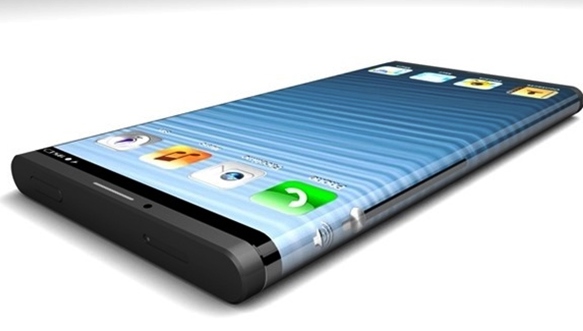
All things considered, I speculate the 5.8-inch estimation may incorporate the edges considering the "all bend" show this new bigger model is required to have.
This could then make it a comparative size to the double bended 5.5-inch Galaxy S7 Edge and brief Galaxy Note 7 which measure 5.5-inches yet don't include the bends their estimations. Or if nothing else we should trust so given Apple perseveres with holding the back catch in the upper left corner of the UI.
Furthermore 60-70M units is a considerable measure for a solitary model and would demonstrate a record busting year ought to the next 2017 4.7-inch and 5.5-inch models additionally offer in numbers anyplace near late years. This would be an enormous inversion in fortunes for Apple which has seen iPhone deals decrease reliably as of late and will fabricate desire that this premium (and higher estimated) 'iPhone 8' (as it is being called) will be something to get hearts beating as the line praises its tenth commemoration.
Obviously with Apple commonly just finishing iPhone outlines six months before their September release, a considerable measure could even now change. In any case, after three eras of incremental outline changes, expectations that 2017 will see the range reinvigorated are probably going to hit new highs…
HTC has started sending media invites for an event on January 12
where the company says it will make its "next big announcement." The
company has shared a teaser invite with "for U" as a tagline.
Unfortunately, not many details about HTC's upcoming announcement are available
right now.
It's worth noting that the January 12 launch date is just after
the CES week which means HTC doesn't want its announcement to get lost in a
host of launches during the event. The Taiwanese company has not dropped any
hints in theinvitefor the launch event, however, recent
rumours have pointed to the launch of the HTC X10 mid-range smartphone in
January. The event could also see the launch of the company's next flagship or
be about thecompany's recent virtual reality push,
or both.
Starting with the HTC X10, the successor to theHTC One X9is
said tolaunchin January and cost around CNY 2,000
(roughly Rs. 19,500). It is said to sport a 5.5-inch full-HD (1080x1920)
display, a 2GHz octa-core MediaTek Helio P10 processor (Cortex-A53 cores),
Mali-T860 GPU, 3GB of RAM, and a 13-megapixel rear camera with OIS.
Another recent report claimed that HTC has been working on its
next flagship, the HTC 11. According to initial rumours, HTC 11 may sport a
5.5-inch QHD (1440x2560) display and run on Android 7.0 Nougat customised with
HTC's Sense 8 UI on top. The handset is rumoured to pack a dual-camera setup of
12-megapixel at the back while an 8-megapixel front-facing camera is also
expected on board. Under the hood, the HTC 11 is expected to be powered by an
octa-core Qualcomm Snapdragon 835 CPU, along with Adreno 540 GPU for graphic
performance. It is said to pack a whopping 8GB of RAM under the hood, with an
inbuilt storage of 256GB. The device is said to be backed by a 3700mAh battery.
According to rumours, HTC's next flagship will launched with a price tag of
$691 (roughly Rs. 47,000). However, all these leaks should be taken with a
pinch of salt as HTC has not mentioned anything about the upcoming device and
the leaks legitimacy remains questionable.
Details of HTC next’s flagship smartphone have seemingly been leaked on Chinese social media, potentially revealing the upcoming handset’s hardware.
A mysterious tipster has posted a roster of specs – and a render image – of what they claim is the HTC 11, an unannounced HTC smartphone expected to launch next year. The details were posted to China’s Weibo microblogging service, and eventually lifted by Western media. But before we dive into the tipped specs, it’s important to remember that although Weibo often churns out solid leaks, it’s also very unreliable – it’s basically China’s Twitter, after all. We have no way of verifying the below information, so it could be a complete hoax.
According to the leak, the HTC 11 will feature a 5.5-inch QHD display. That would be a slightly larger screen than the 5.2-inch panel used on the HTC 10, although the resolution remains the same.
It’s also suggested that HTC will adopt the Snapdragon 835 processor, a new chip that was announced by Qualcomm just last month. It hasn’t appeared on any smartphones yet, but is expected to debut in the first half of 2017. As the Snapdragon 835 is a flagship chip, it’s almost certainly going to be the processor of choice for many of next year’s top-end phones, including the HTC 10. The good news is that the Snapdragon 835 is built on a highly efficient 10nm manufacturing process, which means it has the potential to be significantly faster (or more power efficient) than the Snapdragon 820, which was the HTC 10’s chip of choice.
The leaker also reports that the HTC 11 will feature Qualcomm’s new Quick Charge 4.0 technology, which promises vastly reduced charging times. As this technology is an integral part of the Snapdragon 835 chip, we’d be very surprised if the HTC 11 didn’t have QC4.0.
HTC’s next phone is also rumoured to feature 8GB of RAM (up from 4GB), and 256GB of storage. We find the former a little hard to believe (although the OnePlus 3 did pack 6GB of RAM), although the latter is far more reasonable – especially since Apple introduced a 256GB iPhone earlier this year.
On the camera front, we’re expected to see a 12-megapixel rear-facing camera and an 8-megapixel front-facing camera. That would be a bump from 5-megapixels on the front, but would mean the resolution of the primary camera remains unchanged. However, in the accompanying image, the phone appears to sport a dual-camera arrangement. That’s an increasingly popular flagship feature that we’ve already seen from Apple, LG, and Huawei in 2016.
The final rumoured spec is a 3,700mAh battery, which would be a significant step up from the smaller 3,000mAh cell used in the HTC 10. With potential efficiency improvements courtesy of a Snapdragon 835 chip, the HTC 11 could boast a seriously impressive battery life.
Unfortunately, we can’t verify any of this information, so take it all with
Microsoft asked people who hold research positions in the company to share their thoughts on future developments in their different fields. Microsoft chose 17 women in order to draw attention to the opportunity for careers for women in STEM fields. The researcher's ideas about future technology in 2017 and 2027 make for interesting reading and the world will be a better and more interesting place if half of what they envision comes to pass.
One theme that runs through many of the researcher’s predictions is that by 2027 we’ll be living in what might be called a smart world. Advances in AI, computer vision, natural language processing, probabilistic programming, and smart objects will embed us in a world that responds to our presence by serving up information about many of the things in our immediate environment. All we will have to do is ask and objects will be identified, local conditions will be described, and the path to a desired location will be laid out on the street in front of us.
Credit: Microsoft/YouTube
All of the researcher’s ideas are worth checking out. Here are several that we found particularly intriguing.
Sara-Jane Dunn a scientist at Microsoft’s Cambridge research lab, holds out the possibility that a theory of biological computation will emerge by 2027 that will probably not look anything like the silicon-based computation we are familiar with today. The result could be profoundly disruptive – living software that opens up entirely new industries and solutions in the areas of medicine, energy, agriculture and materials. She’s suggesting the possibility of a revolution in the nature of computing itself.
Mary L. Gray, a senior researcher at Microsoft’s New England research lab, suggests that social and computer scientists will develop a better understanding of groups that live in information bubbles as early as next year. Mapping connections among people and measuring information flow into and out of the bubble can produce insight into how these groups form and the cultural, economic and political impact they have.
Nicole Immorlica, another senior researcher at the New England research lab, proposes that economists will develop theories about the sub-optimal decision making that occurs when people are faced with the complex decision spaces that can be produced by big-data analytics. These theories can form the foundation for machine learning applications that people can use to optimize decisions in complex spaces.
Immorlica also suggests that by 2027 a significant proportion of personal income is likely to be derived from the data people generate as they interact with the smartworld instead of the work that they do for their “job” as we understand it today. She suggests that an economy based on generating data through daily living could result in a redistribution of wealth.
Asta Roseway, a principal research designer at Microsoft’s Redmond research lab, focuses on how smartworld technology will affect agriculture, ecology and the environment. She proposes that in 2017 the combination of sensor-loaded smart objects, computer vision, and advanced machine learning will enable farmers to increase efficiency and productivity. She also suggests that development in these technological areas can contribute to low-energy farming, forest preservation and urban-space agriculture by 2027.
Credit: Microsoft.
This is only a small sample of the thoughts Microsoft’s researchers have about our technological future. What makes their ideas especially interesting is that these women are the scientists and research specialists who are working to see their ideas come to fruition.