The legendary TB-303 has magical properties; it is filled to the brim with analog shimmer. Its output jack is a gateway to a parallel universe and when you twiddle the filter knobs an army of highly trained pixies chisel the square waves from freshly harvested unicorn souls. So if you want a TB-303, you should buy a TB-303. But if you're after *that sound* Troublemaker will give you everything you need in spades.
Troublemaker sports a carefully crafted diode filter emulation and among the available oscillators are the typical raspy, nasal sawtooth and rubbery squarewave with its oddball shape and shifting pulsewidth.
This is a recreation of the original Roland TB-303 synth — the go-to hardware if you want some dirty bass lines. Needless to say, iOS musicians will have a field day with this little app.
This app makes it extremely easy to set reminders for a request, which you have received via iMessages. Say, if grandma sends you a "Can you pick up a bottle of milk on your way here?", you can just copy the text and paste it to TxtBck's reminders without leaving iMessage. Then, you can have the app notify you when you reach a specific location or at an exact time.
This is a "scanner" type app, which lets you take a photo of a document with your phone's camera and then crops it, tunes it to look like black-on-white text, and converts it to PDF.
We live in the era when digital communication is the most often used channel and social awkwardness when face to face with a new person is a given. Who knew your phone might help you there as well? This app is full of nifty little conversation starters that should hopefully, maybe, spark a conversation. All we need to do now is remember how to speak proper... properly!
We've captured the classic look of mis-registered ink plates, over inked screens and hand selected authentic vintage papers to create a wildly exciting way for you to easily turn any photograph into a swell vintage matchbook cover, playbill or postcard to share.
• Printed transforms your photos into vintage printed art.
• Watch your photo get printed plate by plate as it transforms your images.
• Save your printed art and share them on Instagram, Twitter and Facebook.
• Create beautiful, high res, frameable art for your home.
These are paid iPhone and iPad apps that have been made offered for free for a finite period of time by their developers. There's no way to tell how long they'll be free. These sales could terminate an hour from now or a week from now — clearly, the sole factor we will guarantee is that they were free at the time this post was written. If you click on a link and see a price value listed next to an app rather than the word “get,” it is no longer free. The sale has stopped. If you download the app, you will be billed
1. Klicker
Klickr App
Quite easy it is to lose track when counting while doing something else. We experience this every now and then
So that is why we came up with Klickr. An easy App so that you don’t have to worry about the numbers and just concentrate on more important things in life.
The first app to integrate your well-known tally counter into your new loved apple watch
Beautiful Go has a single design goal. Capture the beauty of the Go board in a digital medium.
– 19×19, 13×13, 9×9, and 5×5 unconstrained Go boards. – Great for independent study or casual pass and play games. – No in App Purchases. – No ads. – No internet connection needed to play.
Features: – Add multiple accounts – Add multiple payees – Add income/expense transactions under different category – Add customize income/expense category name – Add transactions quickly – Instant summary for today/week/month/year – View history records and compare them – iCloud sync – Passcode lock – Export through email – Separate graph report for income or expense alone – Search for transaction by Category, Payee, Between two dates or any of them – Intuitive UI, easy to use
Multiple data export: – Monthly transaction history – Monthly transaction history for each category – All transactions for each account – All transactions for each member – Transactions under custom search conditions – Two date ranges between the transaction records
Great Calendaring • Powerful Week and Timeline Day with inline editing. • Uses and expands on your native calendar data. • Sync like you would with the default calendar(Google, iCloud, Exchange). • Advanced repeating event options. • Move/Copy Events • Event Templates • Email Events • Show events on Facebook • Military time, ISO week, and week start options. • Uses time bars and icons to keep you informed at a glance • Filter events based on iCal calendars. • Almost 200 professional icons to mark your events
Power and Flexibility • Universal Support • TextExpander Support • Portrait and Landscape Support. • Retina Display Support. • Background and color theme choices
Main Features: ⊹ Ultra high precision instruments ⊹ Calibration made for walking, jogging, hiking, driving and bicycling ⊹ Accurate speed calculations ⊹ Tracking record, showing tracks on different maps ⊹ Statistic GPS information, sharing track data by csv, nmea, gpx, kml, kmz format ⊹ Able to edit the track and track point nicely, store tracks information for further using ⊹ Able to upload csv, gpx, kml format routines. ⊹ Export tracks by email. (check gps.db and fav.db from attachement.) ⊹ Import tracks by MyTracks local wifi or iTunes Document Sharing, or files. ⊹ Support Barometer data collecting.
Instruments: ▪ Compass ▪ Elapsed Time ▪ Distance ▪ Pace ▪ Latitude ▪ Longitude ▪ Altimeter ▪ Course ▪ Speed ▪ Barometer ▪ GPS Signal power ▪ Speed dashboard ▪ TRACK CSV, NMEA, GPX, KML format ▪ TRACK KML for Google Earth
The app offers daily trainings, based on a model where you repeat and improve the tricks that you already know and learn new ones. The more advanced commands are subdivided into levels, so the learning process is kept smooth.
Every trick has a description, that is divided into little-illustrated steps, that guide you as a trainer. Problems? There is always experts that you can consult directly, who would try to help and identify why you and your dog are struggling.
There is a Clicker built in App, that you can use during the training.
The app offers daily reminders, more than 20 different Tricks and Awards. You can customise your dog's profile and track your progress points and awards for every level.
The application is available in English and Lithuanian languages.
Warp Shift is a unique puzzle game set in a mysterious world. AppSpy says that it "is well-balanced and gorgeous to look at and filled to the brim with innovative twists and new ideas.”
# # # THE MEDIA LOVES WARP SHIFT # # #
► “Warp Shift certainly sits in the same bracket as Monument Valley.” (PocketGamer) ► “Warp Shift is a leap ahead of any puzzle game we’ve ever reviewed.” (Edamame Reviews) ► “It is well-balanced and gorgeous to look at and filled to the brim with innovative twists and new ideas.” (AppSpy) ► “A mobile game that fans of Monument Valley will enjoy.” (Golem) ► “Warp Shift is genuinely refreshing.” (Gamezebo) ► “Warp Shift is more of an adventure than a standard puzzle app.” (Common Sense Media) ► “Warp Shift is absolutely gorgeous.” (AppAdvice) ► “A must for anyone who likes their games equal parts relaxing and taxing.” (TapSmart)
# # # AN AUDIO-VISUAL VOYAGE THROUGH TIME AND SPACE # # #
Warp Shift is a unique puzzle game set in a mysterious world. It takes you on a marvelous journey that challenges your mind and stimulates your senses. Experience beautiful visuals, challenging puzzles and intriguing sound design.
Guide the little girl Pi and her magical companion through the maze-like confines of the enigmatic ancient chamber that keeps them trapped. Think ahead and alter your surroundings wisely to usher Pi back home – one swipe after another. Embark on an audio-visual voyage through time and space, never knowing where your next step will lead you.
# # # MIND-BOGGLING FEATURES # # #
• A work of art: Enjoy a mesmerizing game that stimulates your eyes, ears and brains • How to get out?: Traverse maze-like environments that change at your fingertip • A unique kind of puzzler: Alter your surroundings to open new ways • From one realm to another: Explore 6 unique worlds with 15 levels each • Easy of access: Reach your destination via taps and swipes • No stress or hurry: Play to relax, escape and clear your mind
Learn fingerspelling and have fun! Compete with a conversation partner through iMessages. Your improvements are graphically depicted and both partners will even have a score.
Learn fingerspelling (ASL) anywhere with sending messages back and forth!
One person acts as the starter, sending either a sign or letter. The receiver has to pick the correct counterpart. The sender can rate or auto-rate the choice. Finally both will obtain points which will be added to a score.
Company contacted the industry ministry last month asking for lower import and manufacturing duties, says sources.
New Delhi: Apple Inc. needs India to offer assessment concessions on iPhones that the organization plans to produce in the nation, a man with learning of the matter said.
The organization contacted the industry ministry a month ago looking for lower import and assembling obligations, the individual said, requesting that not be distinguished referring to rules on addressing the media. The concessions ought to proceed even after the government reveals its products and enterprises tax which is relied upon to subsume every current duty, the individual said.
The Cupertino, California-based maker of iPads and iPhones is quick to kick-begin operations on the planet's quickest developing telephone showcase as growth moderates in nations, for example, China. Apple trails rivals offering less expensive handsets in the $2 trillion (Dh7.34 trillion) Indian economy and delivering gadgets in the nation could quicken the take off of its notable retail locations to catch thriving interest on the planet's second-most populated country.
Apple's way toward a greater cut of Indian deals hasn't been smooth. Its application to open stores was dismisses as it fell foul of nearby decides that normally require no less than 30 for every penny of segments to be made locally before an outside organization can offer through their own particular outlets. Apple makes the vast majority of its items in China and doesn't at present meet that criteria. Apple's representative in India, and Mattu J.P. Singh, a representative at India's Commerce and Industry Ministry didn't instantly react to messages looking for input.
Digital media is a mess, and Apple seems far from fixing it.
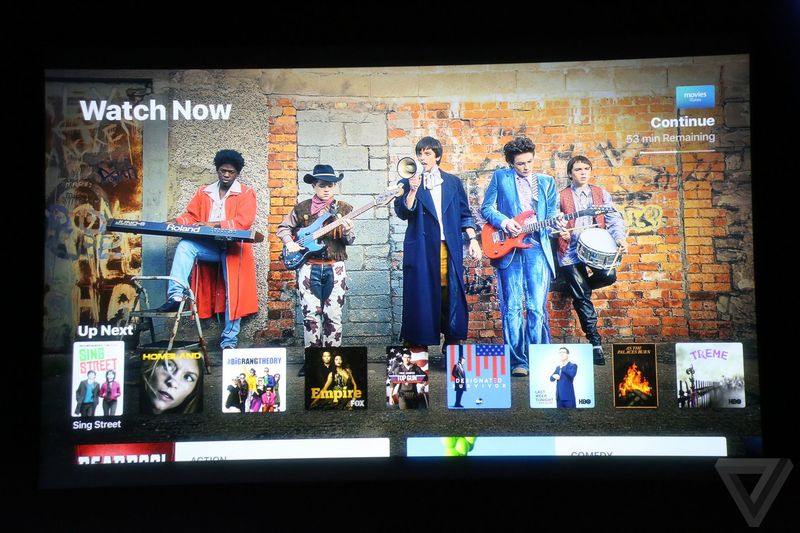
Apple’s latest attempt to crack digital TV arrived Monday in the form of a name change most consumers might not even notice. It’s simply called TV, and the new app replaced Apple’s Videos app with the release of iOS 10.2. It’s a neat addition for the iPhone and iPad, but it’s designed to shine on the Apple TV, where the app is supposed to hijack the interfaces and libraries of nearly every content provider available to offer a central location for all your TV needs. By opening TV, you can search for any show or movie, sync your many video accounts, and let Apple override the clumsy and disparate designs served up by other media companies.
But there’s a big problem. The TV app is neither what Apple really wants to deliver nor is it even a remotely suitable stopgap until the company can realize its vision for the future. Apple doesn’t have the support of Netflix or Amazon Video. The company’s single sign-on feature, which is designed to make it easier to use a cable subscription to sign into individual channel apps, only works with a handful of providers, excluding huge names like Comcast, Time Warner Cable, and Verizon FiOS. If Apple got its way, the TV app could be capable of upending the industry. Instead, it’s a reminder of how hamstrung technology companies arewhen trying to bridge the gap between our current app-centric world and a digital media future that’s deliberately kept out of reach by cable companies.
How we consume television is still undergoing rapid change — and it’s getting more complicated instead of simpler. As it stands today, consumers have shifted from cable, or never having cable in the first place, to a hodgepodge of different apps delivered over a dizzying number of hardware solutions. Perhaps you fire up the Netflix app on your smart TV, switch over to your Xbox One for HBO Go, or use the voice search function on your Amazon Fire TV to see if you can purchase the new episode of a show you watch that’s still gated behind cable. If you want a cable alternative, then you subscribe to AT&T’s DirecTV Now, Dish’s Sling TV, or Sony’s PlayStation Vue, which all exist as yet another app to download.
Apple’s new TV app is supposed to solve all that complexity by unifying all these fragmented services into a single, searchable system. It even gets mapped to the TV button on the Apple TV remote. But because it lacks real support from the most important players in the industry, it’s just another voice in the TV app cacophony.
Worse yet for Apple, it does not operate a streaming video service of its own and makes a set-top box that does nothing its competitors don’t already do, besides the robust games section of the App Store. It’s not for lack of trying. Apple has notoriously spent years trying to gain relevance in digital media, investing resources and countless failed software and hardware attempts to wrestle control away from content providers so it could offer its own solution. The TV app is just the latest potentially doomed attempt. That’s largely because it takes stellar ideas about how we should consume entertainment and smashes them against the immovable object that is the current video landscape.
This is a large source of pain for Apple. Nowhere is the iPhone maker less relevant — and yet so hungry to be in control — than TV. The company once dominated digital media by using iTunes and the explosive popularity of the iPod to control everything from how music was bundled and played to how television shows and movies were digitized and distributed online. But there’s no way cable networks are going to cede that much control to Apple in the new world of prestige TV, and there’s no way that the the Apple TV will ever give the company enough leverage to force a change like iTunes and the iPod did.
In the transition from CDs to downloads, Apple led the way and was always two steps ahead of its competitors. In the new streaming media world, Apple always seems like it’s two steps behind. iTunes, once a centerpiece of our media libraries, is now either ignored or openly disliked. And Amazon has popped up as a more capable replacement for movie and TV show rentals. Sling, Sony, and AT&T have figured out ways to release “skinny bundles” of TV channels over the internet.
You could write books on Apple’s multitude of missteps in TV, but fundamentally the company’s loss of influence traces back to missing the boat on streaming combined with an inability to gain any sort of real leverage over traditional video providers. Those companies have been able to forestall and deflect a fate similar to the one that befell the music industry in the heyday of iTunes, and that is unlikely to change in the near-term.
There is hope for Apple yet. The company is arguably the only player in a position to offer a democratic, holistic viewing experience that ties everything to a single source. Amazon, the company perhaps closest to that goal, makes both hardware and software. That means it tends to promote its own products over competitors’. Cable companies, too, are self-interested and prone to resisting change that could hurt their businesses. That means the products those companies produce, whether on-demand apps or live TV, are often ugly, hard to use, and rarely if ever play nice with others.
Apple could craft the ideal solution. It may not be the holy grail at first. But over time, it could take shape as a single iTunes-shaped app and streaming service that syncs with every provider. And if Apple could begin amassing a critical mass of users, it may gain the bargaining power to cut the live TV deals it’s always wanted — something like Sling or PlayStation Vue, except at a lower price and with an easy-to-use interface. Apple’s motivation here would be clear. By ensuring that this service only worked at its optimal level on the iPhone, iPad, and Apple TV, the company could again incentivize consumers to use only its software, instead of treat its devices as expensive screens for displaying video from elsewhere.
The TV app is the hollowed-out husk of that vision, waiting to fulfill its true potential. But Apple needs to convince streaming services like Netflix and Amazon to share their data and channel owners like CBS and NBC would need to compromise on the creation of an unprecedented digital TV bundle that could compete with cable. And the new TV app doesn’t not look like a must-use app that will give Apple enough power to force those companies to play ball in the way the iPod / iTunes combo brought the music industry to heel.
Apple’s most immediate fix is bringing Netflix and Amazon on board. Without those two companies and the data behind their extensive video libraries, Apple’s TV app remains broken. For instance, you can use the TV app’s universal search function to find a Netflix show like House of Cards, and you can even then pop over to Netflix to watch it. But you can’t sync your Netflix account with the TV app. That means your viewing habits and past behavior don’t get incorporated into the “Watch Now” panel.
This is important. Because when you think about it, most people would rather have what they want to watch surfaced easily before them then migrate to a search bar, type in the name of the show, and then click a link to a separate app. The amount of effort required to use the search function in Apple’s TV app in lieu of firing up Netflix makes it unlikely everyday consumers will change their habits. If Apple can’t convince viewers to migrate out of third-party apps, its software will be nothing more than a glorified TV guide that’s used sparingly or not at all.
The other option for Apple is to just give up on this aggregation app model and simply launch its own, proper streaming TV service.
Sony, Dish Network, and now AT&T have all stepped in to offer their own take on the cable alternative in the form of a skinny bundle that starts around $20 a month and scales up to nearly four times that, when you toss in sports and other add-ons. These are imperfect solutions, grounded in acquiescing to content providers’ more forceful licensing demands. They also give consumers only a slightly less frustrating way to watch cable without installing a box in their home and paying for channels they won’t watch.
The interfaces of these apps are messy, and there are significant restrictions in how live TV can be viewed in certain regions and on mobile devices. DirecTV Now, which AT&T launched late last month, hasn’t been able to convince CBS to come on board. That means it offers a pay-TV service that doesn’t have some of the most popular programming in the country.
Apple’s efforts in this area have been even less successful. According to anin-depth report from The Wall Street Journal in July, Apple tried and failed to strong-arm its way into lucrative licensing deals that would have allowed the company to offer a digital TV service unlike any we’ve ever seen. It did so by relying on the tactics perfected by execs like Eddy Cue and wielded years ago when Apple first began hammering out licensing deals with record labels
According to the WSJ, Apple’s top negotiators tried demanding a multi-year freeze on monthly rate per viewer fees, liberal use of ad-skipping and cloud DVR technology, and wider access to global rights for streaming outside the US and locate affiliate deals for providing regional programming. Apple also refused to show content providers its proposed interface, saying simply that it would be “better than anything you’ve ever had.” The negotiations, which took place from around 2009 to 2014, fell through.
It turns out that TV, unlike music more than 15 years ago, is still not in a place where Apple can alter the industry on its own terms. In the meantime, we’ll continue to use imperfect solutions to the problems that keep streaming services from replacing cable. If Apple somehow figures out how to convince companies desperate to maintain profits and preserve relevance to take a chance on the future, it could turn its TV app into what it was meant to be.
But right now, the only difference between Apple’s position today and where it was a year ago is its new glorified TV guide, one consumers will wish was more capable and forward-thinking than the cable companies will let it be.
Apple's AirPods are now available to order from the company's online store for $159.00, following weeks of speculation on exactly when the wireless headphones would launch. Originally, the AirPods were going to debut in "late October," but Apple delayed the launch for unspecified reasons.
In the official press release, Apple mentioned that the AirPods will begin arriving at Apple retail stores, Apple Authorized Resellers and select carriers beginning sometime next week. Shipment will begin in "limited quantities" at launch, and Apple encourages customers to continue checking its online store for updates on availability and shipping estimates.
Now, users can order the Bluetooth-enabled headphones, which provide up to 5 hours of music playback and high-quality sound through a "seamless and automatic connection" between the AirPods and an iPhone. To charge the AirPods, the included travel case doubles as a charging station that provides up to 24 hours of battery life for the headphones.
AirPods introduce an effortless wireless listening experience packed with high-quality audio and long battery life. These magical wireless headphones use advanced technology to reinvent how we listen to music, make phone calls, enjoy TV shows and movies, play games and interact with Siri, providing a wireless audio experience not possible before.
The new W1 chip inside the AirPods allows for seamless connection with devices in Apple's ecosystem, so that they connect instantly whenever the rechargeable battery case is flipped open near an iOS device. When in the user's ears, the AirPods "know when you are listening" and will subsequently pause music when they're taken out of an ear. Playback controls are left to Siri-enabled voice commands, which are brought up by double-tapping on the buds.
Included with the AirPods is a Lightning cable used to charge the carrying case, and the headphones require Apple devices running iOS 10, watchOS 3 or macOS Sierra. Buy your own AirPods now at Apple.com for $159.00. Deliveries are currently estimated to begin arriving on December 21 in the United States.
EVERYTHING YOU NEED TO KNOW ABOUT THE NEW NOKIA ANDROID PHONES
It’s official: New Nokia smartphones are on the way. Here’s what we know so far, including the Nokia Android phones’ release date, specs, price, as well as all the latest news and rumours.
In December, we heard official word that new Nokia handsets were in development, and that they would run on Google’s Android OS. This is a big deal, because it’s been quite a while since we saw authentic Nokia phones.
Nokia started making portable phones in 1987, and became the best-selling handset brand by 1998. But despite strong beginnings, it wasn’t long before Nokia slumped. In 2011, after a sales slump caused by competition from Android and the iPhone, Nokia signed its own death warrant by agreeing a pact with Microsoft to ship all its phones on the ailing Windows Phone OS. Nokia eventually stopped making phones in 2014, selling its mobile business to Microsoft and switching focus to mobile network equipment.
Microsoft sold phones under Nokia’s Lumia brand for a while, but that’s basically been killed off now – cue the new Surface Phone, expected 2017. Microsoft’s ownership of the Nokia brand license eventually expired this year, and that’s why we’re now about to see new Nokia handsets – stay tuned.
Unfortunately, it’s still early days, so many of the actual hardware details are a mystery. Here’s what we know so far.
1. THE PHONES ARE COMING IN EARLY 2017
The good news is that the first new Nokia smartphones will be released “in the first half of 2017”. That’s not very specific, but we can take a guess at when the handsets might launch.
The first major opportunity is CES 2017, the big Las Vegas-based technology tradeshow that takes place in January each year. However, we’re not entirely convinced the Nokia smartphones will be ready for launch that early.
The next big chance is Mobile World Congress, a similar tradeshow that’s focused on mobile technology. That kicks off in Barcelona on February 27, and is sure to be a hotbed of smartphone launches. There’s no reason why a new Nokia smartphone couldn’t debut at the show.
Alternatively, the new Nokia phones could get their own dedicated launch event, bypassing trade shows altogether.
2. BUT THE HANDSETS AREN’T BEING BUILT BY NOKIA
It’s very important to note that Nokia isn’t actually building the handsets.
After Microsoft’s ownership of the Nokia brand license expired, new Finland-based company HMD Global Oy secured rights to the brand. HMD has exclusive rights for the next decade, which means no other company will be able to launch Nokia-branded handsets during that time.
On the software front, HMD has partnered up with Google so the new phones will run on Android. And although HMD will design the hardware, the actual handset will be built by FIH Mobile Limited, a subsidiary of Foxconn – one of the companies that builds the iPhone.
3. NOKIA IS STILL VERY MUCH INVOLVED
Just because Nokia isn’t building the phones doesn’t mean it’s not involved. Nokia will have a representative on HMD’s board of members, and will set performance and brand requirements – as per the licensing agreement. Nokia will also receive royalty payments for the use of its patents, and will let HMD use its research and development properties.
Microsoft's Lumia handsets are no more – long live Nokia?
“We’ve been overwhelmed by the enthusiasm shown around the world for the return of the Nokia brand to smartphones,” said Brad Rodrigues, Interim President of Nokia Technologies. “The HMD Global team has the ambition, talent and resources to bring a new generation of Nokia-branded phones to market, and we wish them every success. I’m sure our millions of Nokia fans will be excited to see their new products!”
But perhaps most importantly, HMD Global Oy is comprised almost entirely of former Nokia staffers. For instance, CEO Arto Nummela, Chief Product Officer Juho Sarvikas, and President of HMD Global Florian Seiche all previously held senior positions
If we had to take a guess though, we’d expect a flagship smartphone launching in the first half of 2017 to be running Qualcomm’s new Snapdragon 835 chipset. But that’s all we can guess at, for now.
6. ANDROID GUARANTEED – BUT WHICH VERSION?
As we mentioned earlier, HMD Global Oy has teamed up with Google to launch the new smartphones with Android. That’s a welcome change from the old Windows Phone-powered Nokia handsets of yore.
However, it’s not quite clear what operating system the phones will run on. The most likely bet is Android 7.0 Nougat, the latest version of Google’s mobile operating system. It rolled out this autumn, and is likely to appear on many of the handsets launching in the first half of 2017 – Nokia phones included.
But there are two other alternatives: Android 6.0 Marshmallow, or the currently unannounced Android 8.0. We’d say the former is unlikely, but it could feature if HMD has already developed the phones and plans to release them very early on in 2017. Alternatively, if the handsets miss their 1H2017 deadline, we could see them running on Android 8.0, which we’re expecting to be announced between May and July next year.