Showing posts with label iOS. Show all posts

Wednesday, 4 January 2017

2016 Cyber-Security Lessons.


The year 2016 established to be a bane with heart to cyber-security, with many personal and exoteric entities falling person to discipline cyber incidents. The US Presidential elections were not spared, thus upbringing the question-Who is safe in an increasingly virtual class? As engineering evolves and becomes solon engaged, it will be easier for hackers to tap into the vulnerabilities. Alas, we learnt it the solid way. Here are whatever rattling factual lessons in certificate direction from the cyber incidents of 2016.


* Security emerges as an in-demand market: Every cloud has a medal coating, and this was moreso evident in the mushrooming of warrantee bleach providers during in the past. As realistic hacks accumulated, so did the effectuation of tackling them. Differentiated skills were shapely by condition consultants and customers leveraged these to egest themselves cyber-ready. In fact, department defrayment has emerged as a top precedency post-2016. Predictions for the industry are best, with Cybersecurity Ventures predicting that planetary spends on assets products and services present hit $1 cardinal between 2017 and 2021.


* Ransomware present formula: On the flipside, hackers are exploits are much innovational and money-savvy. Ransomware and distributed-denial-of-service (DDoS) attacks dominated 2016. For information, the commencement on an American hospital, followed by one on the San Francisco Municipal Transportation Bureau. FBS assemblage states that in Q1, 2016, $209 million was squared in ransom to cyber jade groups. This has spiralled to a worrisome size of $1 billion for 2016.


* Quislingism faculty cut the solicit: Companies can judge to get rid of cyber-hack chases by collaborating shaft. A numerate of technology mate programs bang been launched-LightCyber, Disconsolate Hair Systems and Skyhigh Networks. Ready-deliverable security integrations tidy it workable to follow rapidly and as per mercantilism needs. It is not around dead alone-join keeping and fend off the mercurial minded.


* A sound political colorize emerged: US elections, Russian-sponsored cut, tiff between Apple and the FBI regarding consumer privacy-the enumerate of government meddling with the warranty listing is interminable. One can expect the unvarying political-led debates and happenings in 2017-be it the cyber-security insurance or expectations on private privateness versus mortal warrantee.


* Assemblage guarantee is the new sort: A motion is seen from perimeter-based meshwork precaution measures to terminus and information department. Start-ups much as Cylance, Cybereason, CounterTack and Crowdstrike in the termination instrument space, eff emerged and are likely to beautify statesman hot in 2017. Biggies in the interval, let Palo Alto Networks and Cisco-they started exploring the end marketplace in 2016. One can judge this movement to hold in the forthcoming gathering.


* Money matters entity: Companies tally visaged huge hits to their revenues, owing to department hassles. Character ended up payment statesman than $1 billion on the two data breaches it was subjected to. Its expected $4.8-billion raft with Verizon, is also on the limit of have. Never before person the business repercussions of section breaches been so stark, sending a dread warning to remain cyber safe in 2017.


* IoT Section is a discriminative poverty: With a super adjunctive Internet of Things (IoT) earth, comes a super danger to disrupting lifetime and transmute. The recent onset on DNS provider Dyn, strip to educatee Internet outages, is evidence enough. Companies moldiness bump themselves o.k. to reality and understand that securing IoT networks finished and through, is not a pick but a necessity.


* Consolidation is the way ascending: A disparate and broken industry cannot make admittedly valuate for the customer, be it toll consider or solvent effectualness. The year 2016 saw whatever statesman consolidations, much as Symantec-Bluecoat, Confer-Carbon Wicked and so on. The way leave talk, with mutual measure existence realised in the hunting to get cyber pitfall-proof.

Saturday, 24 December 2016

This startup once thought it would 'put a bullet through Google's head' — now it's killing its own operating system


Cyanogen, the startup that once claimed its customized version of Android would "put a bullet through Google's head," has quietly announced that it's throwing in the towel on direct competition as it pivots its business after a tough year of layoffs and executive shuffles.
"As part of the ongoing consolidation of Cyanogen, all services and Cyanogen-supported nightly builds will be discontinued no later than 12/31/16," writes Cyanogen in a blog post released late on Friday night.
In plainer terms, this means that the Cyanogen operating system — which people could buy pre-loaded on smartphones like the OnePlus One or Lenovo ZUK Z1 — won't be getting any further updates. And Cyanogen will be discontinuing its homebuilt services, like the "Find My Phone" feature.


Cyanogen has raised $185 million in funding from investors including Andreessen Horowitz and Rupert Murdoch. And while Cyanogen had some limited success partnering with companies like OnePlus to preinstall its operating system on new phones, and a close relationship with Microsoft, manufacturers were hesitant to ditch Android entirely for fear of throwing the baby out with the bathwater.
In July 2016, following reports that Cyanogen had laid off 20% of its workforce, founder and former CEO Kirt McMaster told Business Insider that while the company was hard at work on a "modular OS" concept, it was committed to continuing to build the Cyanogen operating system.
In October 2016, Facebook veteran Lior Tal took the CEO role, with McMaster becoming executive chairman. Tal announced a renewed focus on that "modular OS" approach, where phone manufacturers can integrate bits and pieces of Cyanogen technology into their own Android phones, in lieu of investing as heavily in its own operating system.
"Android is this huge continent that everyone lives on," Tal says. "That's just how it is."


This announcement doesn't mean the end of Cyanogen as a concept: CyanogenMod, an open source version of the Cyanogen operating system that anybody can download and modify, still enjoys an active community who will keep hacking away at it as an Android alternative free from corporate control.
But for the average user, it's way more of a hassle to download and maintain an open source operating system like CyanogenMod than it is to use Cyanogen, the company's more streamlined, Google-like approach to system updates and services. It also means that if you already have a Cyanogen phone, it'll get far less useful as of January 1st.
All in all, Cyanogen's new mission is less dramatic than the company's original mission of "[taking] control of Android away from Google," but it provides those manufacturers an alternative way to offer their products without relying as heavily on the search giant's services and technology.
"I think we can achieve the same mission within Android today," Tal told Business Insider in October.

Wednesday, 21 December 2016

Leaked documents suggest Apple will launch a premium iPhone codenamed 'Ferrari' next year

A Chinese social media user has revealed what they claim are leaked production documents from Apple that seem to substantiate rumours that the company can launch three iPhones in 2017 — "s" models of the iPhone 7 and iPhone 7and, and a redesigned, top-tier model internally codenamed "Ferrari," Apple corporate executive reports.


The blogger, who posted the document on one amongst China's biggest social media platforms Sina Weibo (it was first noticed by Chinese technology web site cnBeta), is understood for leaking info from Apple's East Asian supply chain.

And the documents seem to verify a list of rumours concerning options the "Ferrari" — maybe a codename for the iPhone 8 or the iPhone 10 — can have.

The rumoured options include an "AMOLED" panel — a brand new kind of OLED (organic LED display) screen already utilized by Samsung — which might enable the phone to possess a borderless, all-display front surface. Another rumour is that the OLED screen would be mounted on plastic, suggesting that it would be arced. This lines up with a report from The Wall Street Journal that says Apple is testing prototypes for brand new iPhones which can have a brand new style focused on a sinuous screen.


Other rumoured options the document mentions include a glass-sandwich style (glass at the front and back of the phone), an "invisible" home button, and wireless charging.

The "Ferrari" iPhone, that can be released to mark the iPhone's tenth anniversarycan accompany "a substantial internal design," the leaked documents claim. The document additionally says that Apple is considering relocating the SIM card receptacle towards the bottom of the handset to create area for internal parts.

The iPhone 7s and 7s plus, internally codenamed D20 and d21, are expected to possess liquid crystal display displays like previous iPhones, the documents reveal.

All of this is often in line speculatively from KGI Securities, that pointed to three iPhone models in 2017, with just one sporting the new reasonably OLED screen.


Friday, 16 December 2016

How to Switch your photos, contacts, calendars, mail, music, and messages from Iphone to Android

Making a decision to switch from iPhone to Android can be a tough one- Apple iPhone are difficult to let go, but switching from iPhone to Androids it’s actually not as difficult as it may seem. You have made the decision anyways. There are lots information on your iPhone that you would love to have them on your new Android phone, well, Apple is unwilling to assist but trust me there are others who are will to help.Nowadays people are heading out of the iClouds for reasons best known to them, so are other people who are willing to support this switch process for the fun of it.

Gathering momentum    


Create a Google account before ordering your new mobile phone.  

First things first, before your new phone arrives make sure you have a google account. Google account is android phones as iTunes and iCloud are to Apple phones. If you have an existing Gmail account then you are good to go, but if not, get one here. You should also enable 2-step verification. Google account can hold personal information such as contacts, calendars, chrome passwords, and so add some more protection for your own good.

This may be a hard one to take but you are going to have to turn off iMessage. If your contacts send you iMessage instead of SMS, you will lose the message if you don’t have an iPhone to receive the message. Turning off iMessages tell Apple to stop sending them (iMessages). Moreover you don’t want your friends, colleagues and family to think you are ignoring them.

One more thing, sign in for Dropbox if you don’t own one, there are a number of cross platform that use Dropbox instead of google drive as sync engine.


Using Google Drive.


Your iCloud Drive will be useless the moment you turn off your iPhone, Google Drive can actually help with the transition process. Not only will it be useful in storing and transferring documents, but while we were preparing this guide, Google unveiled a simple backup system right inside its Google Drive iOS app.
It won't bring over everything but (and we still recommend you follow the steps in this guide to have a seamless Switch) But if you are satisfied with moving contacts, calendar, and photos then give it a try.


To get started, download the Google Drive app on your iOS device and head into the Settings (inside the hamburger menu button). Select Backups and you’ll be taken to a screen where you can choose whether you want to save your contacts, calendar events or photos. Tap Start Backup and it’ll begin running, though you’ll need to keep your phone on and the app open, so it’s best to do it overnight with your phone plugged in.
The Google Drive method works well, but it’s an all-or-nothing situation, so if you don’t want every single calendar entry and contact coming over to your new phone, you’ll need to trim them down in their respective apps first. And as we describe below, you’ll still want to change the defaults on your old iPhone to keep everything up to date. But it will get some of the data onto your new phone quickly so you can start using it.

Pixel power

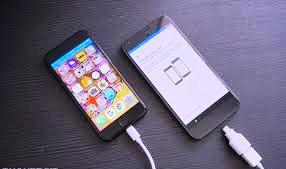
If your new phone happens to be a Pixel or Pixel XL, moving in is easier than it is with any other phone. That’s because of Google’s included Quick Switch Adapter, a simple, speedy method for pulling your data over to your new phone.
During the setup of your Pixel, you’ll be given an option to copy your data from your iPhone. Dig through your Pixel box to find the tiny USB-C adapter, attach your Lightening cable to it, and plug the appropriate ends into each phone. Then, after you log into your Google account, the Pixel will search your iPhone for any contacts, calendar events, photos, videos, non-DRM-protected music, texts, and even iMessages, and bring them all safely over to their new home. (One thing though: If you use an iTunes backup instead of iCloud, Google recommends that it is an unencrypted one. To check, open iTunes on your computer, plug in your iPhone, go to the Summary tab, and make sure the Encrypt iTunes Backup option is unchecked. If it was turned on, you’ll need to run it again.)
It’s all pretty magical, and the process is much easier than Apple’s Move to iOS app. And it’ll save you a whole lot of time by skipping most of the steps you’ll need to take with just about every other phone.

Calendar

When you open your calendar app for the first time on your Android device and sign into your new Google account, it’s probably going to be empty. But moving all your appointments from your Apple calendar to your Google one is easier than you think.
  
You can export your calendar entries with icloud
If you have a Mac, the first thing you’ll need to do is open the Calendar app on your computer. Select the calendar you want to export, head to the File menu, and click Export to create an ICS file. (Report if you have more than onee calendar to copy). If you are using a PC, however, you'll need to go through a few small circles.First log in to iCloud.com and open the calendar app. Select the calendar you want to share and click the broadcast icon to the right. In the accompanying dialogue box, select public calendar and copy the address that shows up. (The address will be too long to view, you'll have to click the email link below and copy everything)  Paste the entire link into a new tab, change “webcal” at the front to “http”, and press enter. That will download the ICS file you need. Finally, go back to your iCloud Calendar and uncheck Public Calendar, then repeat the process for any other calendars to want to copy over.
find the ICS file you saved
Then log in to your Google calendar on the web and import the file you downloaded by clicking on the gear icon in the top right corner of the screen. Go down to Settings, click Calendars and find the Import calendar button. Then all you need to do is find the file you exported and your iPhone’s dates will show up on your Android phone. Just don’t forget that you’ll need to do this for each of the calendars you’ve exported (Home, Work, Birthdays, etc.).
When all that’s done, the last thing you need to do is change the default calendar account on your Apple devices (including your old iPhone) from iCloud to Google. On iOS, you can switch it in the Calendars tab inside the Settings app, while on OS X you’ll find it inside the app’s preferences. From there, you can simply log in to your Google account and your events will forever remain perfectly in sync.

Contacts

Now that you’ve got your appointments in order, you’re going to need some people to communicate with. And since you’re already an expert in importing calendar files, you’ll just need to do the same with your contacts.


Select all the contact you want to move before you go
Once again, you’re going to start with your computer, but things are a little different. On your Mac, jump into the Contacts app, and do a select-all so you make sure to grab all the names in your address book (or go through and select the ones you want). Then navigate over to File > Export, and select Export vCard. Check to make sure the file says something like “Amy Andrews and 200 others,” choose where you want it to go, and hit the save button.
It’s just as easy on your PC. Go back to iCloud.com and this time select the Contacts app. Select all of your contacts, click the gear icon at the bottom left of the screen, and find the Export Vcard option.


Before you import your contacts Google will send it back to old version, don't panic!⦽

Then go back to your Google account on the web, but this time you’re going to open Contacts (it’s in the second batch of icons). Click on the More option under your account icon on the left, scroll down to the Import button, and select CSV or vCard file. However, since Google is currently in the process of redesigning Contacts, you can’t actually complete the import here. Instead, it will prompt you to go back to the old app where you can click on the Import Contacts button at the bottom of the left-hand column. Once the box opens, choose the vCard file, and your Google address book will instantly populate with all of the names from your iOS one.

Mail 

If you’re already using a GMail account as your main email address, you can skip right to the next section. When you sign in to your new Android phone with your Google account, all your mail will be there. But setting up your iCloud account isn’t too much more difficult. And even though you won’t see an option for iCloud when you go to add a new account, you can still use the GMail app to manage your Apple mail.

To get started, open the Gmail app on your new phone, go to Settings (at the bottom of the sidebar), and tap Add account. On the Set up email screen, select Other, and follow the prompts to enter your iCloud email address and password. (If you have 2-step or 2-factor authentication enabled for your iCloud account, you’ll need to create an app-specific password first on your Apple ID account page.)


GMail doesn’t include a dedicated iCloud tab, but you can still use to set up your iCloud account

That should be enough to get your account up and running, but if you’re still getting error messages, you might need to tweak the server settings. You can find the incoming IMAP and outgoing SMTP server settings on Apple’s website. And if you don’t want to use the GMail app that came with your phone, you can download any number of great ones from the Play Store, including AltoNewtonOutlook, and others that you may be familiar with on iOS.

Messages

Here’s the only real stumbling block with switching between iOS and Android: Your messages don’t play nice between the two operating systems. Even if you’re moving between Android phones the system is less than ideal, mostly relying on third-party solutions that may or may not work.


turn of imessage.

As we already discussed, Google offers an excellent solution baked into the Pixel, and Samsung offers something similar with its Smart Switch app, but otherwise there’s no guarantee that you’ll be able to bring your messages over. The most popular tool is iSMS2droid, but it relies on making an unencrypted iTunes backup, digging into your drive to find the SMS database file, and renaming it and converting it. Not exactly the easiest of solutions. 
So, unless you use WhatsAppFacebook Messenger, or some other over-the-top service, your iMessages will likely be forever locked on your old iPhone. But a clean slate might be for the best anyway since you’re going to be a green bubble from here on out. Because you’ve already turned off iMessage, right? 

Photos
Now that the important information is all ported over, it's time to get into the fun part. We know you're going to be using our new phone to take photos and videos, but all the ones you took with your old iPhone can come along too. And you won't need to attach any cables to transfer them.


Your Android photo library will look just practically the same as the one on your old iPhone

All you need to do is download and run Google Photos on your old iPhone. Really, that’s it. Once you log in to your Google account, the app will do all the heavy lifting for you, scanning the entire contents of your photo library and dutifully copying everything that’s inside (including any photos and videos that reside on your iCloud Drive). And that’s not even the best part. Google Photos won’t even count the space it uses against your Google Drive storage limit, so long as you opt to store High Quality shots rather than full-size ones. If you used the Google Drive transfer process from earlier in this article, Google already put all your photos and videos in Google Photos, so you're all set. 

It might take a few hours for larger libraries to upload, but once it’s finished, you’ll never be more than a tap away from a lifetime of memories. So whether it’s your next Android phone, a new iPad, or the web, you need only sign in to the Google Photos app to access every picture and screenshot you’ve ever taken, no matter how or where they were shot.

Music

just like your photos, getting the tunes from your old iPhone onto your Android phone is quick and easy, if you subscribe to a streaming service, it won't take any time at all- just download your app of choice, sign in and start rocking out. And if you're using a service that supports uploads( including Apple Music), your entire library will be at your disposal


 Google Play Music will store 50,000 tracks for you, all for free.

But even if you have a ton of ripped tracks on an external drive, Google has you covered. You don’t have to be a subscriber to Google Play Music to take advantage of its best feature—storing up to 50,000 of your own tracks. And it won’t cost you a dime. Just log into Google Play Music web app, go to the menu in the upper left, and select upload Music.your entire collection will be ready  to stream a few minutes( or hours depending,on the size)on any and all your devices.

Anything else   

For the rest of the apps you use on your phone, you’ll need to hit up the Play Store to find replacements or Android counterparts. All the major apps are represented, of course—Facebook, Twitter, Instagram, Snapchat, etc.—and you’ll need only sign in to your account to pick up where you left off. And of course, if your favorite game uses Facebook or some other cloud platform to sync, your progress will be restored once you log in (so don’t freak out, Candy Crush addicts).


Once you meld Safari with Chrome, all of your bookmarks will be available on your new phone.

If you were already using Chrome on your old iPhone, your bookmarks, open tabs, and search history will all be synced to your new device, along with any passwords you’ve stored as soon as you sign in. And if you were using one of the main password managers (1PasswordLastPass, or Dashlane), you’ll be able to grab a copy in the Play Store.

To get your Safari bookmarks into Chrome on your new phone, you’ll need to download the iCloud app for Windows. Once it’s all set up and you’re signed in, click the Options button next to Boomarks and select Chrome. Press Apply, and select Merge in the pop-up dialogue box. (If prompted, allow Chrome to install the iCloud Bookmarks extension.) Once it’s done, all of your Safari bookmarks will appear in Chrome’s bookmark’s tab on your Android phone (and everywhere else).

You can do that right in Chrome on a Mac. Launch Chrome, open the menu at the top right, and click Bookmarks. Select Import bookmarks and settings, choose Safari, and press import.
And that should be it. Other than a stray document or file that you can just toss in your Google Drive, your new phone will be all ready to go. And we don’t think you’ll miss it all.