Showing posts with label Africa data users. Show all posts

Friday, 30 December 2016

Nokia E1 Android Phone have been spotted.


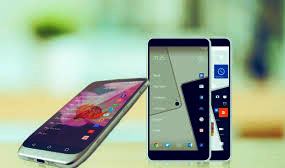
Nokia's rebound under HMD Global is a standout amongst the most foreseen occasions of one year from now, and the organization's guide proposes that it hopes to dispatch five Android cell phones in 2017. Presently, another Nokia cell phone with model number TA-1000 has passed the China Compulsory Certification (3C) implying at its unavoidable entry - and it's idea to be the Nokia E1 that was leaked as of late.


While there is very little revealed about the cell phone, it accompanies the model number TA-1000. Android Pure notes that the recorded gadget is conjectured to be the vigorously supposed Nokia E1 cell phone. The 3C posting affirms that the Nokia TA-1000 accompanies 5V/2A charging support, which implies that the particular cell phone does not bolster quick charging - which is the explanation behind the Nokia E1, as that is tipped to be a mid-run gadget.


The Nokia E1 has further been tipped to accompany Android 7.0 Nougat out-of-the-crate. The mid-go gadget is relied upon to be controlled by a Snapdragon 600 series processor combined with 4GB of RAM. The construct alternative for in-house storage with respect to the device is relied upon to be 64GB. It merits focusing on that the greater part of this data depends on rumours, and should be taken lightly.


It is likewise anticipated  that Nokia   would uncover the Nokia D1C at MWC 2017. The organization has additionally been reputed to dispatch a leader variation named Nokia P with Snapdragon 835 SoC combined with 6GB of RAM at some point in future. Asserted Nokia P has been tipped to include a 23-megapixel camera setup. 


Four new models Out of the five will have display sizes running from 5 to 5.7 inches, at QHD or full-HD resolutions. LG Display, Century Technology (CTC), and Innolux will supply the boards for the up and coming telephones with FIH Mobile serving as generation accomplice


Saturday, 24 December 2016

Despite IT Boom, over 90% of Africa Has No Internet Access

Internet access: Vital to providing wider access to education and health awareness in rural communities in Mozambique

The Internet is one of the most important enablers of social development and education. While Internet services have been quite phenomenal in the rest of the world, access to the Internet remains very low in Africa, especially in the rural communities. According to the Internet World Stats for Africa 2016 (http://APO.af/AvhzA), only 9.3% of people across the African continent are Internet users.
“A few years ago anyone who could not read and write was considered illiterate, but today this concept goes further, encompassing people who do not know how to use information and communication technologies. Health organizations and schools in Africa often face a unique set of obstacles, including a lack of access to much-needed health education and counselling platforms. The Community Tablet was created to help solve these problems”, says Dayn Amade.
In today’s digital world, bringing Internet access to rural communities is a tremendous step in the right direction of social development and education. Mozambican technology start-up company Kamaleon (http://Kamaleon.co.mz) has developed an innovative and engaging way of promoting digital literacy through a shared platform called the “Community Tablet” (“Tablet Comunitário”). The Community Tablet is a solar powered mobile computer with touch screen displays and virtual keyboards built in on a trailer to provide Internet access to remote areas. In order to facilitate interaction with the virtual world, Kamaleon also offers training on how to use the Internet and its features to members of the community and the local workforce.
Launched in November 2016 in Mozambique, the Community Tablet ultimately aims to promote digital inclusion and a knowledge based society in Africa. Beginning in Mozambique with an astounding 24 million people with no Internet connection, the Community Tablet will be used to support campaigns on various Health and Education initiatives in partnership with governmental and private organisations. Spreading up-to-date messages and interactive lessons that showcase symptoms, prevention and treatment options – replacing the need for leaflet distributions to convey life saving information. Kamaleon is on a mission to close the digital divide and empower more people in Africa to engage in the digital economy and its educational benefits.
“I believe technology and digital literacy can contribute to greater effectiveness of civic education campaigns in various communities”, says Dayn Amade.